
My Fan’s Not Working — Now What?
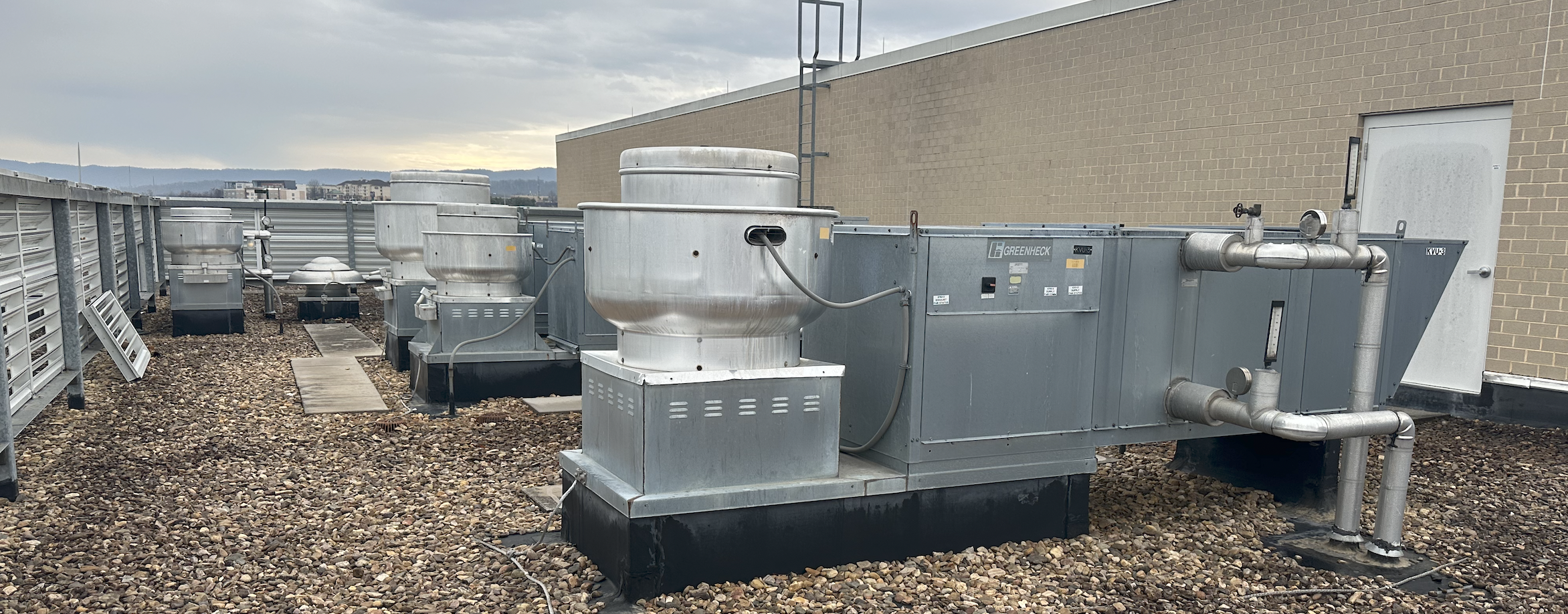
Rooftop fans of the upblast variety
You know that when the exhaust fan goes down, the entire kitchen halts. Smoke fills the prep area, heat builds up, and safety hazards skyrocket. While comprehensive maintenance and compliance with state and federal regulations are best left to commercial and government exhaust cleaning specialists, many common fan issues can be identified and sometimes resolved without deep technical expertise.
This guide walks you through practical troubleshooting steps for the two most common scenarios: when the fan won't turn on at all, and when it is running but simply not pulling enough air.
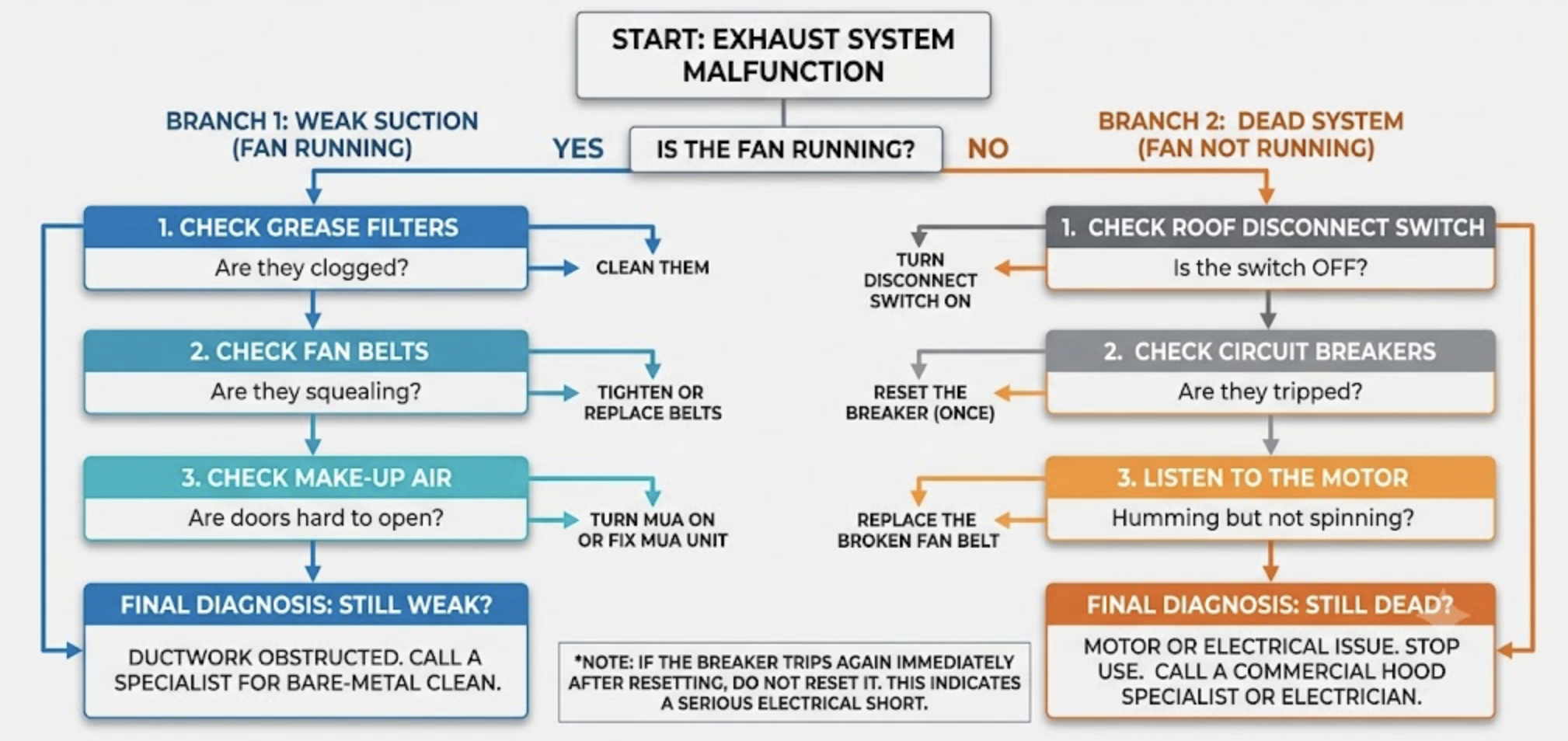
Troubleshooting flow chart
Scenario 1: The Fan Isn't Working At All
If your exhaust system is completely dead, it usually points to an electrical interruption or a broken mechanical linkage. Before assuming the motor has failed, verify these basics:
1. Check the Roof Disconnect Switch
Crucial Step: This is the most frequently overlooked culprit. Many commercial exhaust fans have a dedicated shutoff switch located directly next to the fan unit on the roof (often required for safe servicing). If a contractor, roof inspector, or maintenance worker recently accessed the roof, they may have flipped this switch off and forgotten to turn it back on. Always ensure the power wasn't simply turned off at the fan itself.
2. Inspect the Circuit Breakers
Locate the breaker panel that serves your hood system. Look for any tripped breakers and safely reset them. If the breaker trips again immediately, stop. Repeated tripping indicates a serious electrical short or a seized motor, and requires professional intervention to resolve safely.
3. Listen for Humming (Broken Belts)
If you engage the wall switch and hear a distinct humming noise from the roof, but no air is moving, you likely have a snapped fan belt. In this case, the motor is successfully running, but the belt connecting the motor to the fan blades has broken. Belts are standard wear-and-tear items and must be inspected and replaced periodically.
Scenario 2: The Fan is Running, But Suction is Weak
Sometimes the fan sounds fine, but the kitchen remains smoky and hot. The system isn't drawing enough air out of the building. This is almost always caused by an airflow restriction.
1. Inspect and Clean Your Hood Filters
This is the number one cause of poor suction. Your hood filters are the first line of defense. When they become overloaded with heavy grease buildup, airflow is choked off before it even reaches the ductwork. Filters must be cleaned regularly to ensure proper suction and mitigate fire risk.
2. Check for Squealing Noises (Slipping Belts)
If you hear a high-pitched squealing from the roof, your fan belt might not be broken, but it is likely loose and slipping. When a belt slips, the fan blades do not spin as fast as the motor, drastically reducing the volume of air being pulled from the kitchen. The belt will need to be properly tensioned or replaced.
3. Assess Make-up Air Supply
Exhaust fans push air out of the building, but that air must be replaced. If your Make-up Air (MUA) unit is malfunctioning, or if exterior kitchen doors are surprisingly hard to pull open, your kitchen is likely under negative pressure. The exhaust fan is fighting a vacuum and will struggle to capture smoke. Ensure your MUA unit is operating simultaneously with your exhaust system.
A well-maintained exhaust system is critical for the safety and efficiency of your operations. Routine visual checks by your kitchen staff, combined with professional cleanings and regular mechanical maintenance, will keep your air flowing smoothly.