
The Chemistry of Clean: Why Caustic Agents Rule the Kitchen Exhaust
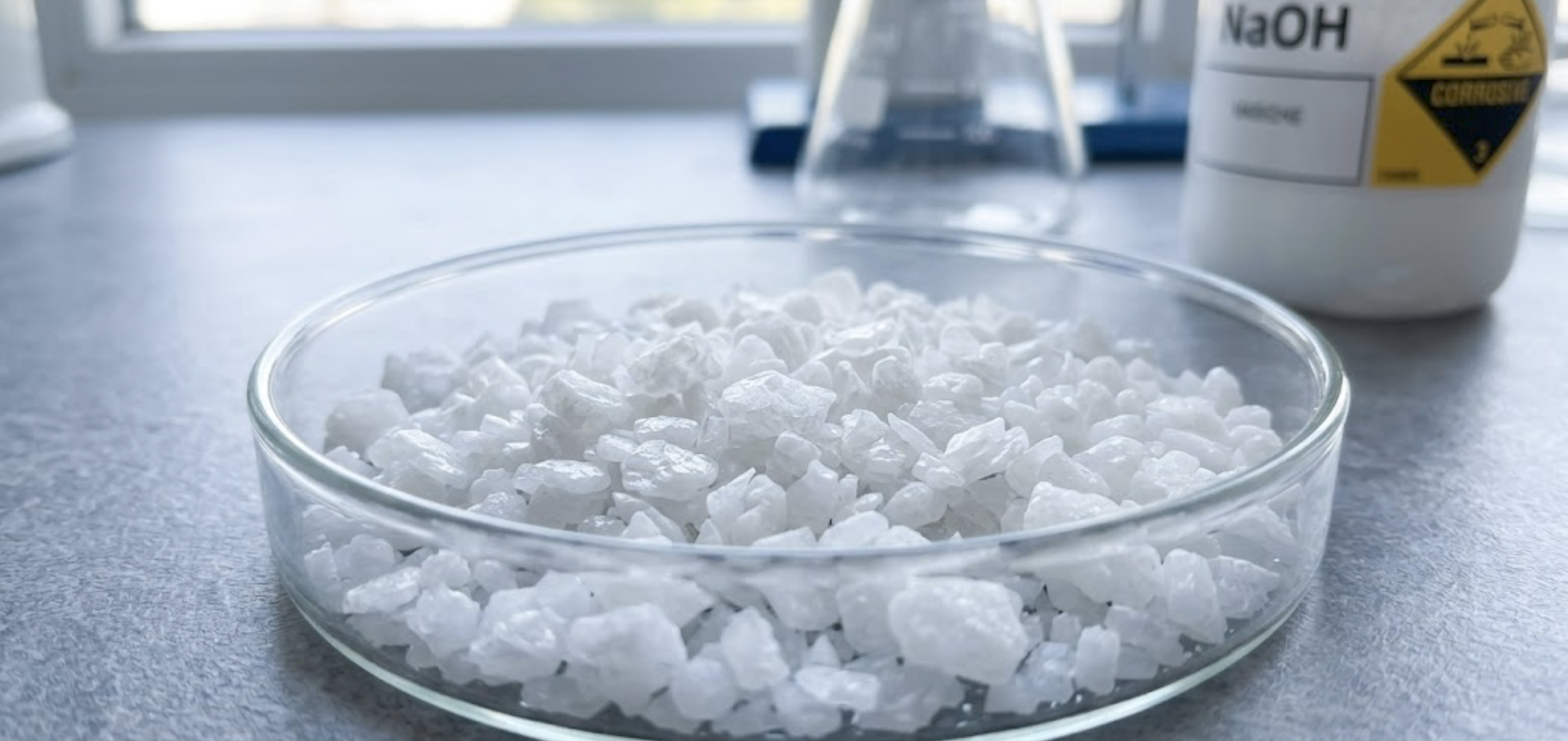
Sodium Hydroxide (generated by AI)
When it comes to maintaining commercial kitchen exhaust systems, the battle against grease and other combustable materials is fundamentally a battle of chemistry. Professionals rely on high pH, caustic cleaning agents, most commonly sodium hydroxide (NaOH), because they are uniquely engineered to dismantle the complex, polymerized fats that accumulate in ventilation ducts. Unlike everyday degreasers that might simply shift a spill or rely on surfactants to lift minor debris, a strong alkali initiates a precise reaction known as saponification. This chemical process involves hydroxide ions aggressively attacking the ester bonds in triglycerides, effectively converting stubborn, hardened grease into water-soluble soap and glycerol that can be easily rinsed away.
The rationale for selecting a high pH solution over a low pH (acidic) alternative is rooted in the molecular composition of the target contaminant. Acids are highly effective at dissolving mineral deposits, oxidation, or rust, but they are fundamentally ill-equipped to break down the lipid-heavy, organic layers found in a kitchen environment. Grease is chemically resistant to acidic attack. By contrast, a high pH environment provides a surplus of hydroxide ions that chemically dismantle the fuel source itself. This is the most critical step in mitigating the fire hazards inherent in any commercial ventilation system, as it transforms dangerous, combustible build-up into a manageable, non-hazardous byproduct.
The use of caustic alkalis in industrial cleaning has a history as rich as the Industrial Revolution itself. Before the late 18th century, producing a reliable strong alkali was a difficult and inconsistent process that typically relied on leaching potash from wood ash, which limited its efficacy for large-scale sanitation tasks. The landscape shifted dramatically with the invention of the Leblanc process in 1791, which allowed for the mass production of soda ash, and subsequent electrochemical methods that democratized access to high-purity sodium hydroxide. While early cleaning methods often relied on mechanical scrubbing, abrasive powders, or simpler, less efficient soap-based solutions, the advent of standardized industrial-grade caustic chemicals allowed for the precision and safety required in modern professional kitchen exhaust cleaning. Today, this legacy continues as the industry standard, providing the only viable way to consistently and efficiently strip heavy carbonized grease from critical infrastructure.
The shift toward using caustic chemicals for kitchen exhaust maintenance aligns closely with the evolution of fire suppression technology. While mechanical scraping and basic soap-based solutions were the primary methods of the mid-20th century, the professionalization of exhaust cleaning began in earnest during the 1960s and 1970s. This period saw the rise of modern, high-output commercial kitchens, which necessitated more aggressive chemical interventions to manage the rapid accumulation of combustible grease. The widespread adoption of liquid-based "wet" chemical fire suppression systems in the early 1980s further cemented the industry's focus on alkaline chemistry; because these systems relied on the principle of saponification to turn burning oil into soap, the cleaning industry naturally pivoted to similar high-pH, caustic agents to maintain system cleanliness and prevent fuel build-up.
Further Reading:
Griffin, B. (n.d.). 60 Years of Commercial Kitchen Fire Suppression. CaptiveAire. https://www.captiveaire.com/Resources/Articles/Griffin_and_Morgan_CKV_Fire.pdf