
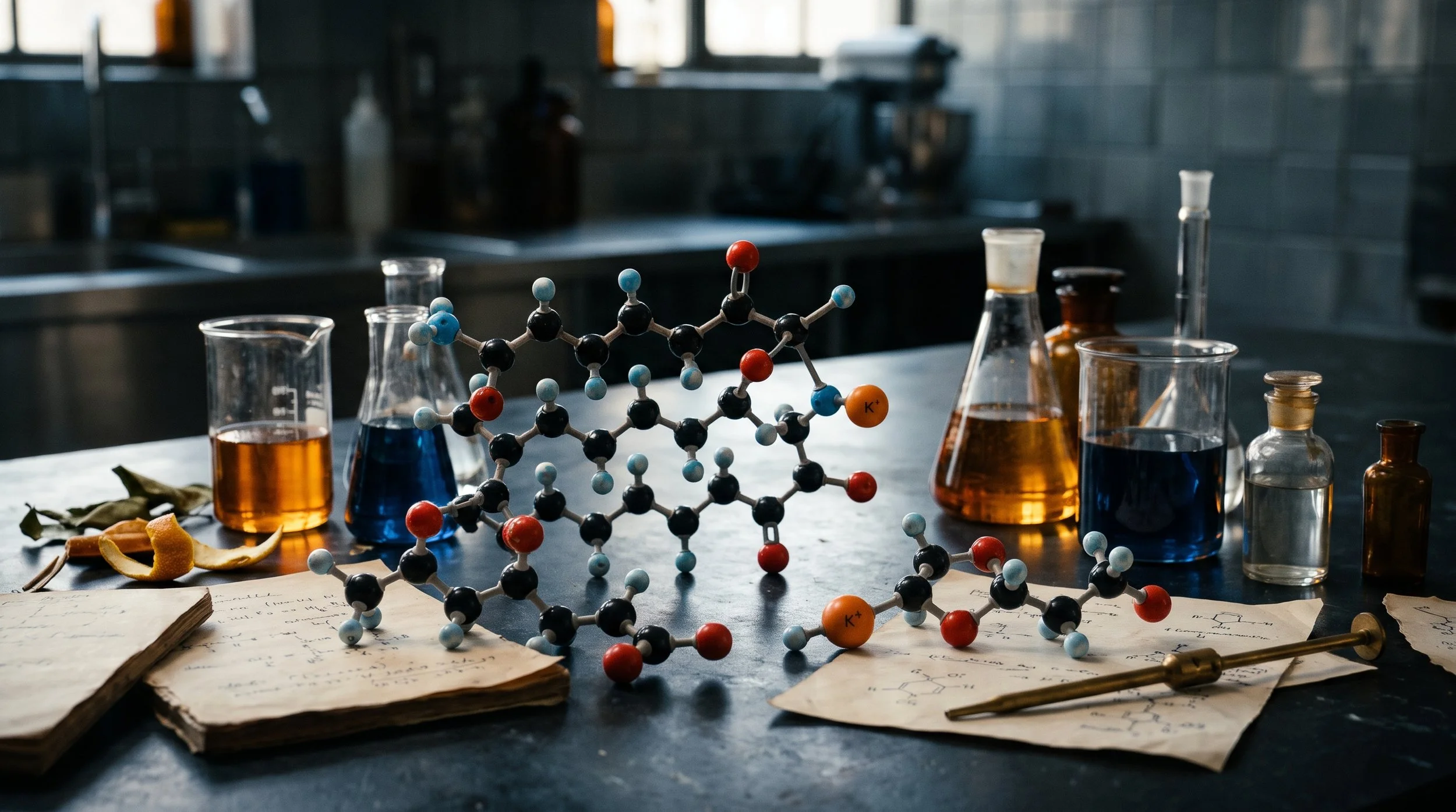
Saponification of a triglyceride molecule (carbon, oxygen, hydrogen, and potassium)
Effective commercial kitchen exhaust maintenance relies on matching specific chemical formulations to the composition and polymerization state of accumulated cooking residues. In high-volume institutional facilities such as hospitals, universities, and corporate dining halls airborne lipids, proteins, and carbohydrates deposit onto hood interiors, ductwork, and exhaust fans. Over time, sustained heat oxidizes and polymerizes these triglycerides into a hardened, carbonized varnish that is insoluble in water and highly combustible. Removing this buildup to maintain compliance with NFPA 96 standards requires targeted chemical intervention rather than simple mechanical scrubbing, ensuring both fire safety and airflow efficiency without compromising the structural integrity of stainless steel or galvanized ductwork.
The primary workhorses of professional hood cleaning are caustic alkaline degreasers, typically formulated with sodium hydroxide (lye) or potassium hydroxide. These high-pH solutions (often ranging from 12 to 14) break down heavy animal fats and vegetable oils through saponification, a chemical reaction that converts insoluble triglycerides into water-soluble soap and glycerol. Because potassium hydroxide generally rinses cleaner and remains more soluble in cold water than sodium hydroxide, it is frequently favored in commercial blends, often paired with surfactants to lower surface tension and penetrate thick grease layers. Technicians apply these caustics as a clinging foam or gel using low-pressure sprayers, allowing sufficient dwell time for the alkali to hydrolyze the ester bonds before flushing the emulsified residue away with high-temperature pressure washers.
Where polymerized grease has baked into stubborn, carbonized deposits, which are common near high-heat charbroilers and fryers, caustics alone may prove insufficient, requiring solvent-based degreasers or alkaline-solvent hybrids. Formulations incorporating glycol ethers, d-limonene, or butyl cellosolve act by dissolving the non-polar hydrocarbon chains that resist aqueous alkaline attack. Additionally, chelating agents such as EDTA or sodium metasilicate are routinely integrated into these blends to sequester hard-water mineral ions (calcium and magnesium) that would otherwise react with fatty acids to form insoluble soap scum, while simultaneously buffering the solution to protect metal surfaces from pitting or flash rusting.
For specific operational environments or delicate surfaces, technicians utilize enzymatic cleaners and mild, neutral-pH or mildly acidic formulations. Enzymatic products employ biological catalysts operating safely at a neutral pH (7 to 8). While too slow for heavy, neglected carbon buildup, enzymatic treatments excel as preventative maintenance additives in automated self-cleaning hood systems and drain lines. Conversely, mildly acidic or non-caustic citrus-based cleaners are reserved for aluminum baffle filters and sensitive alloys, as strong hydroxides rapidly oxidize and pit aluminum while generating flammable hydrogen gas. By calibrating chemical selection, dilution ratios, temperature, and dwell time to the specific metallurgy and soil load of an exhaust system, professional technicians achieve complete contaminant removal while extending the lifespan of institutional ventilation infrastructure.