
Understanding Make-Up Air: The Other Half of Your Kitchen Exhaust System
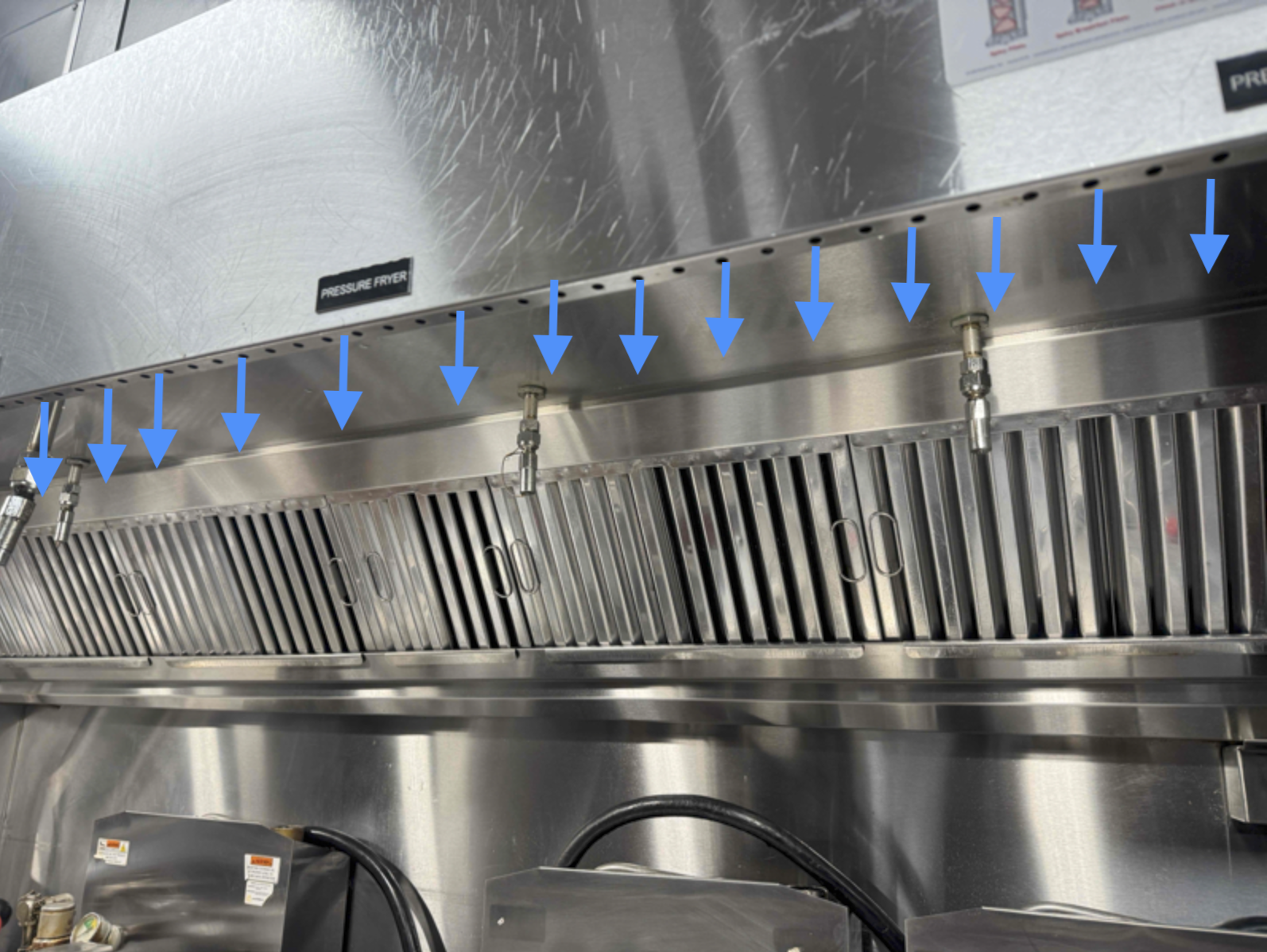
Example of make-up air system in a commercial kitchen exhaust system hood, with the blue arrows indicating the flow of the make-up air
If you manage a commercial kitchen, you're likely familiar with the exhaust hood system that removes heat, smoke, grease, and cooking odors from the space. What's sometimes less understood is what happens to all that air once it leaves the building. Every cubic foot of air pulled out by your exhaust fans must be replaced by an equal volume of incoming air — and this replacement air is known as make-up air. Without an adequate supply of make-up air, your exhaust system can't function as designed, and you may begin noticing problems that seem unrelated to ventilation at first glance.
The physics here are straightforward: when exhaust fans continuously remove large volumes of air from a kitchen, they create a pressure difference between the inside and outside of the building. If that air isn't deliberately replaced through a make-up air system, it will find its way in through any available opening — door gaps, windows, cracks in walls, or even through adjacent dining areas. This creates what's called negative pressure, and its effects are often felt before they're understood. Doors become difficult to open or slam shut unexpectedly. Cooking odors and smoke may spill out of the hood into the kitchen or dining room. The exhaust fan itself works harder but accomplishes less, potentially reducing effluent capture by 20–30%. Staff may complain about uncomfortable drafts or temperature swings.
Not all commercial kitchen exhaust systems include a dedicated make-up air unit. In smaller operations or older buildings, the replacement air may come primarily from the building's HVAC system and transfer air from adjacent spaces. This approach can work adequately in some situations, but it often places strain on heating and cooling equipment that wasn't sized to handle the additional load. As a general rule, the more powerful your exhaust system, the more critical it becomes to have a properly designed make-up air supply. Larger kitchens with high-volume exhaust requirements typically benefit from dedicated make-up air units that can deliver tempered (heated or cooled) air directly into the kitchen space.
When make-up air systems are installed, they're typically interlocked with the exhaust system so both operate simultaneously. This is actually a code requirement in most jurisdictions. The make-up air unit draws fresh outdoor air, filters it, and in colder climates, heats it before introducing it into the kitchen. The goal is to supply roughly 80–90% of the exhausted air volume through the make-up air unit, with the remaining balance coming from transfer air through the building's HVAC system. Getting this balance right requires proper design and periodic verification; too little make-up air creates negative pressure problems, while too much can actually interfere with the hood's ability to capture cooking effluent effectively.
If you're experiencing issues like doors that are hard to open, odors escaping into dining areas, inconsistent hood performance, or higher-than-expected energy bills, your kitchen's air balance may be worth investigating.
Additional Information:
ASHRAE's Commercial Kitchen Ventilation Design Guides: https://www.ashrae.org/technical-resources/bookstore
Accurex White Paper on Make-Up Air Requirements: https://www.accurex.com/blog/white-papers/when-make-up-air-is-required-for-commercial-kitchens
UpCodes Reference for Commercial Kitchen Make-Up Air Code Requirements: https://up.codes/s/commercial-kitchen-makeup-air